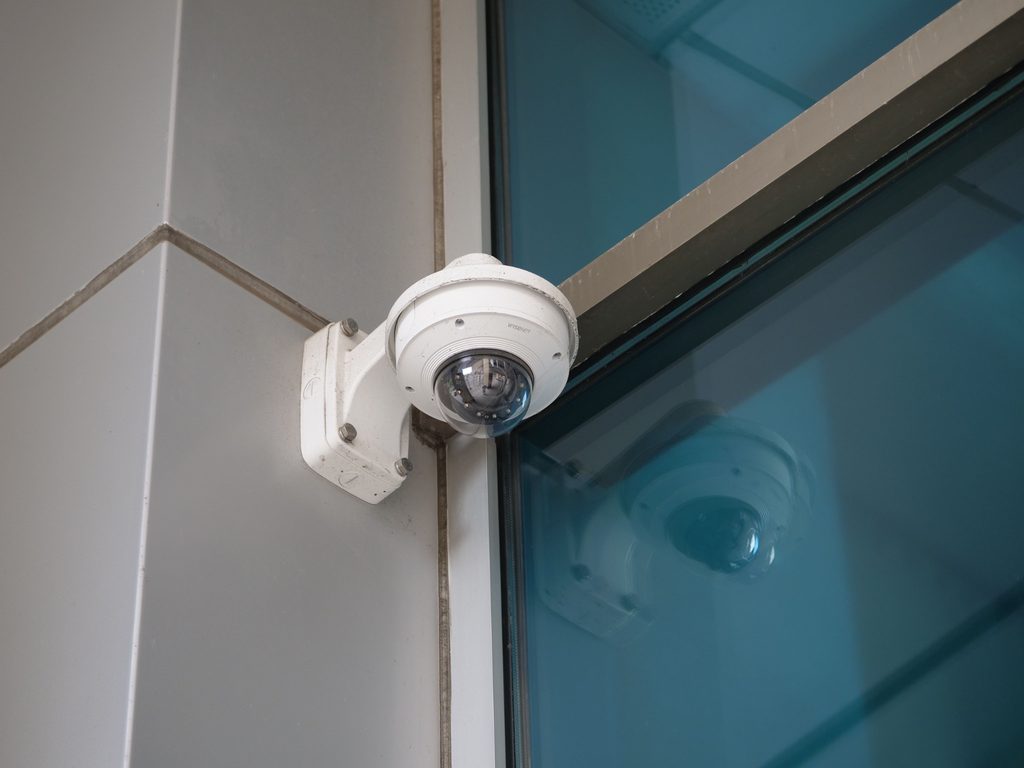
Home security cameras have become more affordable and easier to install than ever before. Many homeowners in Virginia assume that if a camera is on their property, they’re allowed to record whatever it sees. That is mostly true, but there are specific Virginia laws on audio recording, hidden cameras, and where a lens can legally point, and getting it wrong can turn a security upgrade into a criminal or civil liability.

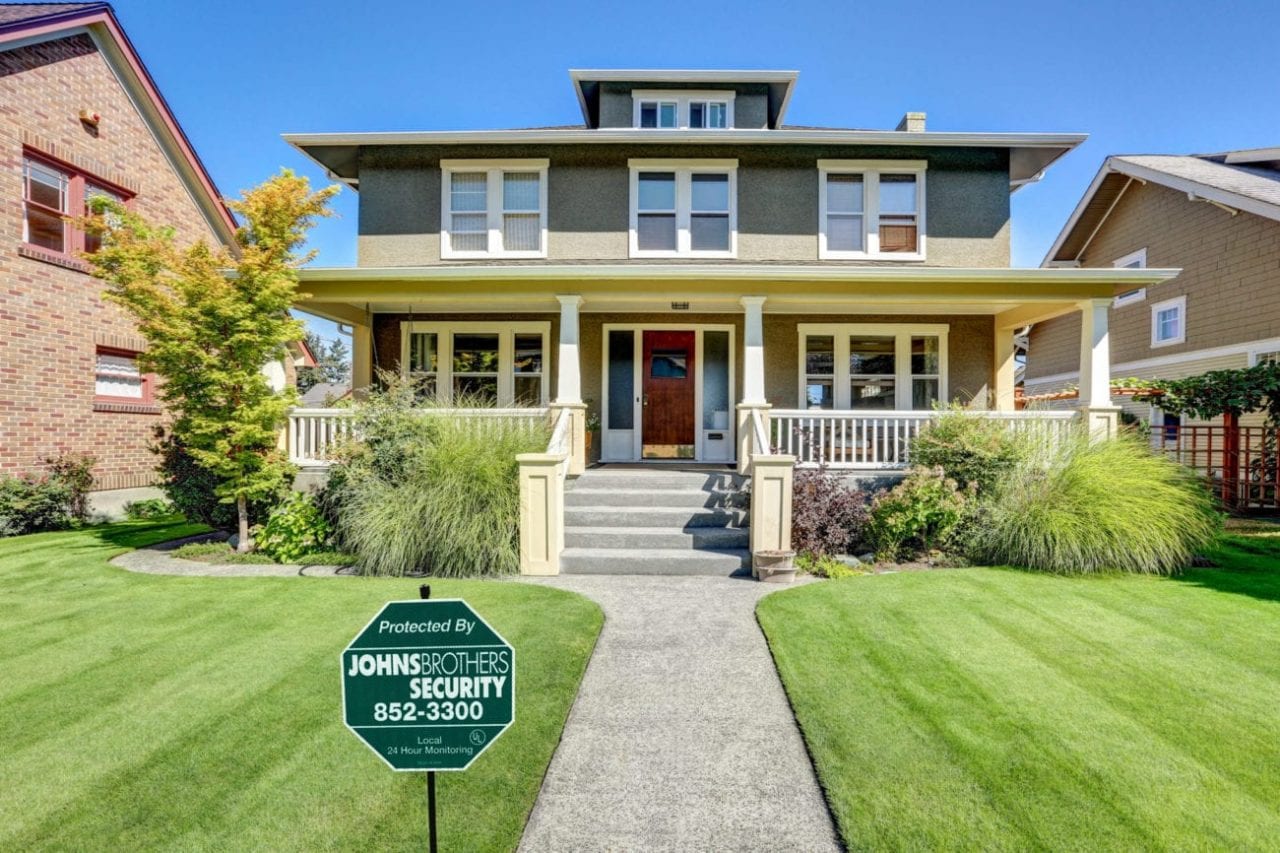
Recording video of your own porch, yard, and driveway is legal in Virginia. There’s no statewide requirement to post a sign or notify anyone that a camera is present; the general rule courts apply is the “reasonable expectation of privacy” standard. This is essentially public in public view, on a sidewalk, in your driveway, walking up to your door. In other words, those who don’t have a reasonable expectation that they aren’t being seen, so recording them isn’t a legal problem.
It’s risky to aim a camera at spaces where someone would expect privacy, such as a bathroom window.
Virginia’s unlawful filming statute (Va. Code § 18.2-386.1) makes it a crime to knowingly create a video or photo of a nonconsenting person who is nude or in a state of undress in a place like a bedroom, bathroom, or locker room, when that person has a reasonable expectation of privacy. There’s also a separate “peeping” statute (Va. Code § 18.2-130) that criminalizes secretly spying into someone’s dwelling through a window or door. Neither of these is really about ordinary home security footage, but they matter if a doorbell or side-yard camera has a direct sightline into a neighbor’s window; that’s the kind of placement that can cross the line, even unintentionally.
Now, this is the part homeowners often get wrong. Video and audio recording are governed by different rules in this state, and audio carries the bigger legal exposure.
Virginia is what’s known as a “one-party consent” state under its wiretapping law, Virginia Code § 19.2-62. That means it’s legal to record a conversation as long as one participant in that conversation consents. You, as the homeowner standing on your own porch, generally count as a participant if you’re part of the discussion. So a doorbell camera capturing you talking to a delivery driver or a visitor is on solid legal footing.
A problem does arise when the camera picks up a conversation you weren’t part of. An example would be two neighbours talking out of your presence, with audio recorded automatically.
You aren’t a party in that conversation and neither of the parties involved in that specific conversation consented which means capturing them talking violate § 19.2-62, which is a criminal offense (typically a Class 1 misdemeanor). In addition to that, it can expose you to a civil lawsuit. Many security experts recommend disabling audio recording on cameras directed towards areas where private conversations between others are likely to happen, or keeping audio limited to your own doorway interactions because of this.
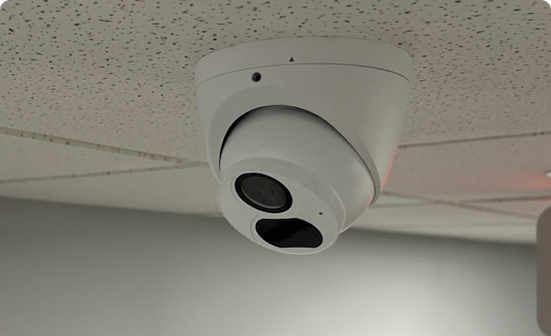
When it comes to openly visible cameras (which are the kind that are mounted in an easily visible place), less legal risk comes with them.
Hidden cameras inside your own home (like a nanny cam in the living room) are generally legal in Virginia in common areas where prospective guests won’t have a heightened expectation of privacy. However, a camera in a bathroom, bedroom, or guest room crosses into the territory covered by § 18.2-386.1.
• Keep cameras focused on your own property, such as your yard, entryways, and driveway.
• Avoid angling a camera so it looks directly into a neighbor’s window.
• Turn off or limit audio capture on cameras that might pick up conversations you aren’t speaking in.
• Never place a camera, hidden or visible, in a bathroom or bedroom used by guests.
• A visible camera and a posted sign, while not legally required, reduce disputes and deter porch theft.
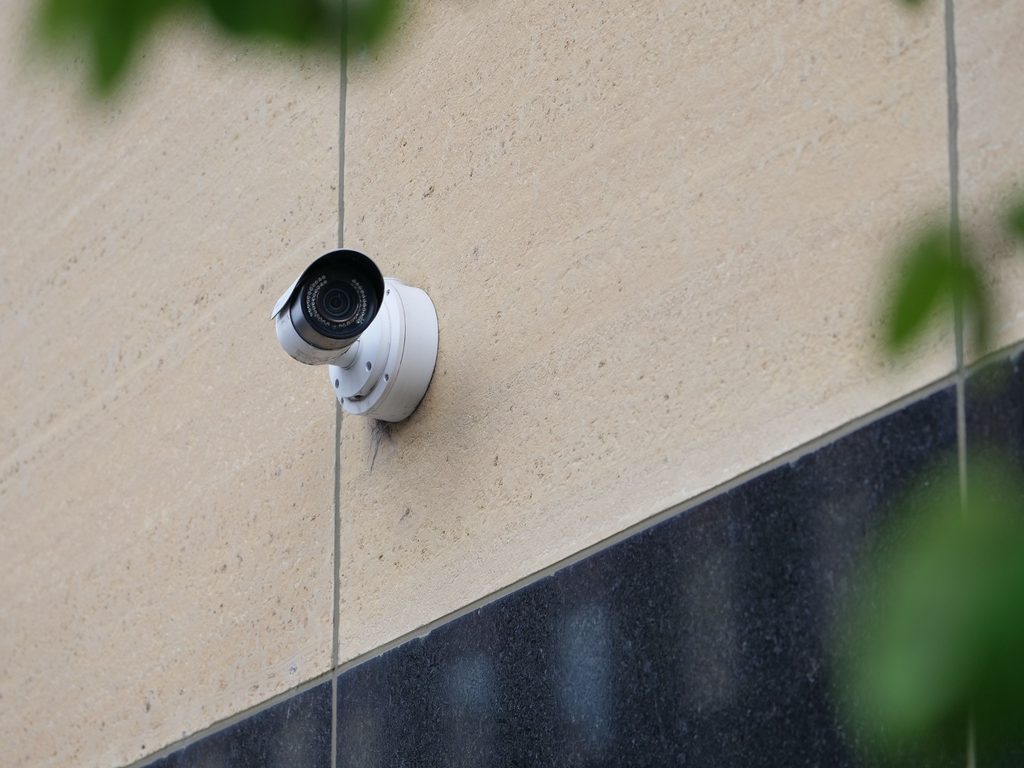
Virginia law gives homeowners wide latitude to protect their property with video.
Make sure to point cameras at your own home, and you’re on solid ground. The legal risk climbs when audio is involved or when a lens crosses onto a neighbor’s private space. If you’re planning a new camera system or want an installer who understands where the cameras should point, Johns Brothers Security can help you build a setup that keeps your home protected and keeps you on the right side of Virginia law.
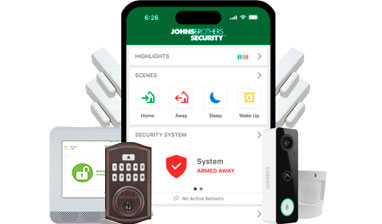
Our most complete package features protection, automation, and video delivered to your smartphone.
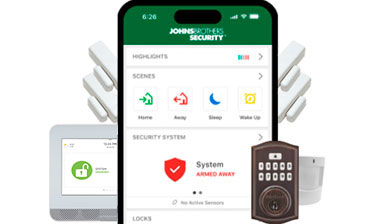
Our most popular smart security package features more than protection – it’s your pathway to home automation.
The essential security package features affordable protection with a wireless connection.
Get a free consultation and the latest smart home security tips & tricks
Quicklinks
Residential Solutions
Commercial Solutions
Corporate Headquarters
Richmond Office
Outer Banks Office
Carrollton Office
Lynchburg Office
Hawk Security Systems, Inc.


DCJS #11-1918 | NC #490218 CSA
Privacy Policy
Copyright © 2026 Johns Brothers Security. All Rights Reserved.